


“Stewards of Eden”: A book every Christian should read
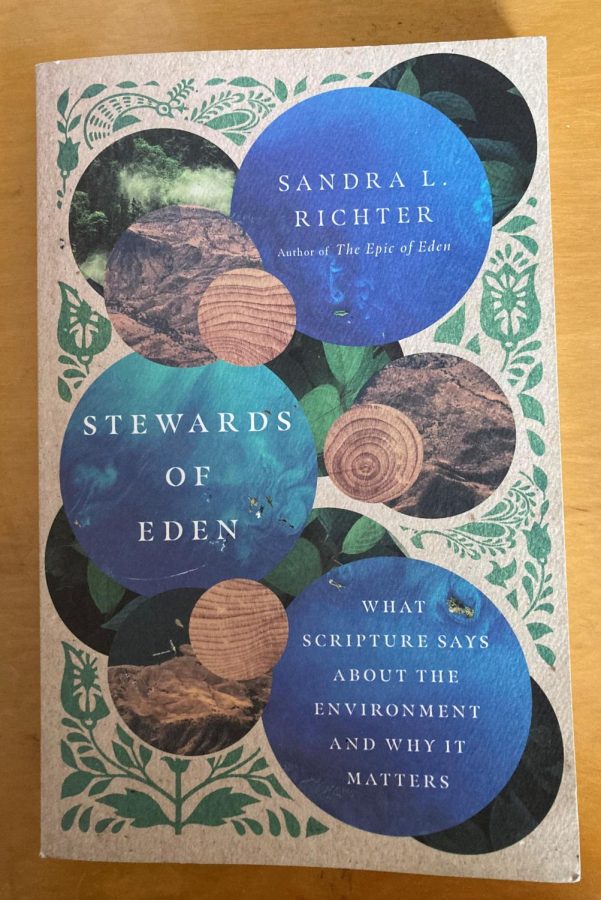
Sandra Richter’s book intertwines environmental practices in the Old Testament with how we should practice sustainability today.
We here at Calvin, we value our faith and see creation care as a part of that. Before coming to Calvin, I’d always thought of caring for God’s creation as just a stewardship mandate given to Adam and Eve, or merely as Christians gazing upon God’s good and glorious creation. But after coming to Calvin, I’ve realized creation care is so much more than that. Did you ever consider that cows need rest, too, or that factory farming is not good agricultural stewardship? Author and Old Testament scholar Sandra Richter, who studies the society and economy of ancient Israel, makes this view very clear in her book “Stewards of Eden: What Scripture Says about the Environment and Why It Matters.” Richter’s primary message to the reader is that the stewardship mandate as outlined in the Bible, that is, serving God with all of the resources He has given us, reaches beyond traditional cultural thought. This subject matter is exceedingly relevant given today’s discussion on climate change and the environment.
Dr. Richter makes the bold statement that caring for God’s creation is “one of the most misunderstood topics of holiness and social justice in the Christian community today.” She discusses creation in light of the Israelites of the Old Testament and the specific commands God gave them. She explains how the Israelites were subtly and not so subtly told to be tenants with the Lord as their landlord as part of this covenant. Richter goes on to tell the reader what the laws given in Exodus, Leviticus and Deuteronomy actually address, whether it be tithing to acknowledge themselves as tenants or helping the landless among them. Not so surprisingly, many of these laws also had to do with sustainable agriculture. For example, the year of jubilee, celebrated every 50 years, was a time of rest for the land that allowed for the soil to recover. Richter poignantly talks about how the Sabbath mandate equates to long-term productivity as well.
The intention of the Old Testament ceremonial laws should remain even if we no longer are called to practice all the ceremonial and civil laws, which helped to keep society healthy and running smoothly. The intention of stewardship and love of God and neighbor should be kept.
Aside from being a good read for the sustainable soul, this book includes several current case studies with solutions and explanations about how God’s commands are based in science and why today’s Christians should follow them. The case study on the current Punjab, India water crisis and its devastating effects is particularly fascinating and speaks to unsustainable produce processing worldwide.
Along with case studies, this book contains thought-provoking discussion questions that make it easy for the reader, book clubs or Bible study groups to focus their thoughts and evoke useful reflection. It’s a great read for college students as well as their parents –– relatively short, easy to read and concise yet extremely thorough.
Now more than halfway through my sophomore year, I find that Richter’s sentiment sums up how many people I’ve met here at Calvin feel. We pride ourselves on thinking deeply, acting justly and living as agents of renewal. In this “Us vs. Them” time in our current society, ecological and creation stewardship isn’t relegated to just Republican, Democrat or Independent Christians: it is all of Christianity’s responsibility. This book will help you profoundly consider what stewardship truly means and realize how God is calling Christians to it. Richter’s work has personally stirred me into much action and prayerful consideration about how I live my life. I hope and pray that it will do the same for you so that we can go forth as agents of renewal.