


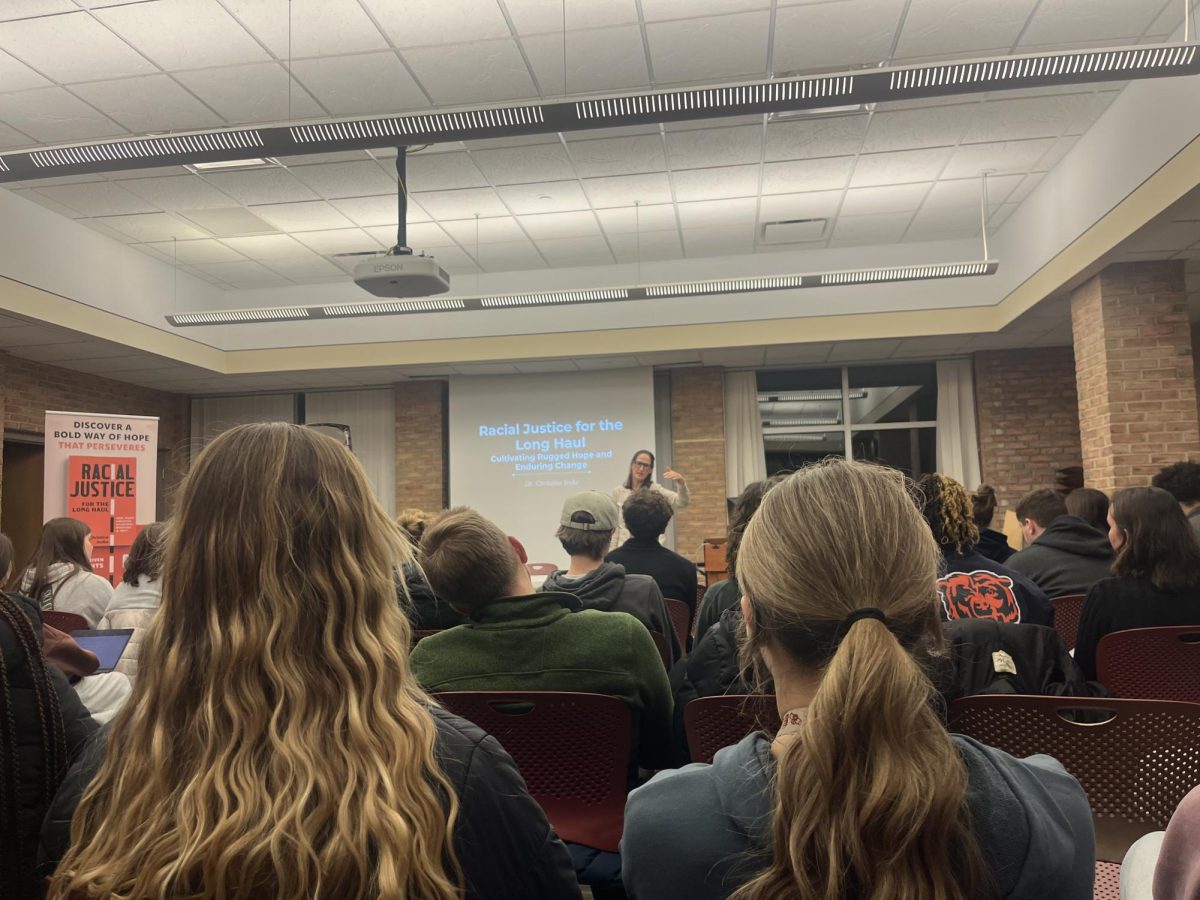
On Tuesday, Feb. 24, Dr. Christine Jeske, author and associate professor of anthropology at Wheaton College, hosted a lecture in Calvin’s Meeter Center Lecture Hall discussing her latest work. The lecture was titled “Racial Justice for the Long Haul: Cultivating Rugged Hope and Enduring Change,” based on the title of her new novel, “Racial Justice for the Long Haul,” which released in early January.
The lecture
Jeske’s lecture began with an introduction from Mark Mulder, professor of sociology and social work. During this introduction, Mulder shared that the event was sponsored by the Kuyers Institute. According to Calvin’s website, the event was sponsored by the sociology and social work department and the school of education as well. Mulder felt “encouraged that so many students, faculty and staff showed up on a Tuesday night in February to hear a lecture about racial justice.”
Throughout the lecture, Jeske shared anthropological stories from meetings with people from various backgrounds, all discussing the issue of racial justice and how we can both have hope and endure change.
Jeske explained that her latest novel comes as a result of seeking to answer the question of “how do you hope for enduring change when you realize what you’re up against?”
In order to answer this question, Jeske interviewed 30 people of color, asking about their experiences and hopes, as well as receiving recommendations of 40 white Christians she should include in her observations. Outside of speaking with these participants, Jeske also observed participants at churches, racism training events and community organizations.
Based on these interviews and observations, Jeske noticed three common themes that helped individuals cultivate hope for enduring change: recognizing reality, living within the story of the good that interrupts the bad and responding to what you’ve received.
In terms of recognizing reality, Jeske explained that we often experience “collisions,” or diversions in our realities that subvert expectations based on prior experiences. “Collisions show us that reality is heavy and complicated,” Jeske explained, suggesting that hope that recognizes reality is neither optimistic nor naive.
Living within the story of the good interrupting the bad reminds us that we are not in the center of the story and suggests that we should live in hope without feeling frantic.
Lastly, responding to what you’ve received means taking feedback graciously and gratefully. This grace that we are to live with is described as “freely received by someone already owing a debt” and one that “anticipates mutuality,” Jeske explained. Continuing, Jeske noted that this anticipation of mutuality acts as a pendulum of giving and receiving undeserved gifts, “in a way that makes life good.”
When we begin to enact these principles, that practice “becomes embedded in your entire lifestyle, and it becomes who you are,” Jeske said. On actionable steps that one can take now, Jeske recommends that we “find somebody who has suffered and take them out for coffee and ask them how they hope.”
For those who would like to learn more about racial justice, rugged hope and enduring change, Jeske’s “Just Learning” newsletter features “bite-sized lessons to walk humbly in areas of injustice.” A quiz on getting to know your justice style is also available as an online resource.

