


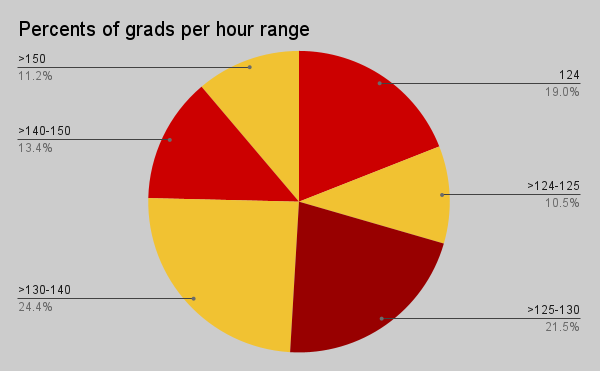
On Tuesday, Jan. 10, Faculty Senate voted in favor of a reduction in the number of undergraduate credit hours required for graduation from 124 to 120.
Herb Fynewever, chair of the Undergraduate Studies Committee, explained that the decision was made to correct a credit gap left when Interim was removed, to bring Calvin in line with industry standards, and to improve the quality of life for students.
The change will go into effect at the start of the fall semester in 2026, according to Tom Steenwyk, registrar and director of academic advising. “We couldn’t make it effective immediately because it caused too much confusion and problems with financial aid [and] with student economic progress,” Steenwyk told Chimes. “Immigration had concerns about us doing it in the middle of the semester … so it will go into effect the first day of the fall semester for anyone who is a student.”
Steenwyk explained that anyone who is a student enrolled during the fall semester of 2026 will see their required number of credit-hours drop to “120 hours instead of 124, even if you were a junior planning to get 124. Merry Christmas!” All major and core requirements must still be met, explained Steenwyk “but let’s say you were at 121 hours after this semester, you don’t necessarily have to take classes next fall to be eligible to graduate, but I can’t give you a degree until December of that year… So, past students who didn’t quite make it, they’re welcome to join the grad list for December of 2026.”
Correcting impacts of losing interim
The decision to make the credit hour reduction was made because credit hour requirements had not been adjusted since interim was discontinued, making this an “overdue change” according to Fynewever. It also puts Calvin on par with industry standards.
Calvin students used to be required to take three interim classes, according to Steenwyk. “That’s 12 hours students were getting in interims that then the very next year they had to put into their semesters, and so that got the semesters a lot bigger than we were used to seeing.”
After this change, Steenwyk noted that many offices across campus that deal with student academics, like tutoring or the Student Success office, “noticed a lot of stress and we’ve been thinking about it ever since.”
Fynewever explained that there was an informal survey conducted among registrars about the amount of credit hours required for graduation, and the most common number was 120 for colleges with two semesters, so this decision also brings Calvin in line with industry standards.
Steenwyk noted that this change will likely have very little financial impact on the university, as credit hours between 12-18 per semester are charged at a flat rate. In theory, it sounds like it could save the university money, but “if a couple thousand students take one less class, that seems like it would reduce the amount of classes we need to offer, but you can also imagine those 2000 students might take it across 700 different classes, so you’re only missing one or two students per class.” The only place Steenwyk felt the university might lose out is if fewer people need to take an eighth semester to graduate or not be full time for that last semester.
In the graduating class of 2025, 80 percent of students completed more than the 124 hours required, according to Fynewever, who expects the change to have a low impact on the university.
Expected benefits for students
Steenwyk said that the biggest reason for the change was student flexibility. “For that first semester now, for a lot of students, it’s a jump and this just gives us a little bit of flexibility to let that be just a slightly smaller semester or give students the chance to drop a class and not have it hurt.”
“It makes it a little easier if life happens and you need to drop a class for whatever reason,” Fynewever told Chimes. He hopes that increased flexibility will allow students more options for when life events like injuries or other things take students away from class.
Eric Washington, professor of historical studies, felt that the change was “an act of justice” and a way to take care of students that are considered to be marginalized. He shared about two students he worked with who came from underprivileged backgrounds, and about how hard they worked in undergrad, particularly in their early Calvin years, and their post-graduate programs to get where they are now.
A change like this would have allowed for students, like these two, to start Calvin with a stronger start, making coming to Calvin for students who are marginalized more acceptable. “So when I was listening [at Faculty Senate], I was thinking about those students, and that’s a testimony to good work that Calvin has done historically,”
Alyssa Pokharel, student body president, expressed her support for the plan and felt that it would benefit international students. She shared her own experience as an international student: “Coming from the other side of the world, there’s a lot to get used to. Just college in general, but also a different culture and a different community. I was really homesick my first year … and academically, I shouldn’t have been struggling.” She shared appreciation for the way her own schedule allowed for some flexibility to help her to adapt, especially after a concussion took her out of class, and hoped that this change would allow the same experience for other students. Pokharel expressed hope that this change would allow for students to get more engaged with campus life, both academically and socially. “I appreciate that letting students have a little bit more breathing room means that they can grow and be formed in different ways outside the classroom.”

