


In light of changes at the university, colder, darker days, and an encroaching finals season, emotional support animals (ESAs) and other pets around campus are a source of great comfort to their owners and their surrounding communities. Following the appearance of the viral “S-Curve kitty” across social media platforms and local news outlets — who “watches over” cars as they drive the S-Curve downtown — across campus, pets are here to “watch over” and provide solace in a time of burnout for many.
Meet our furry friends
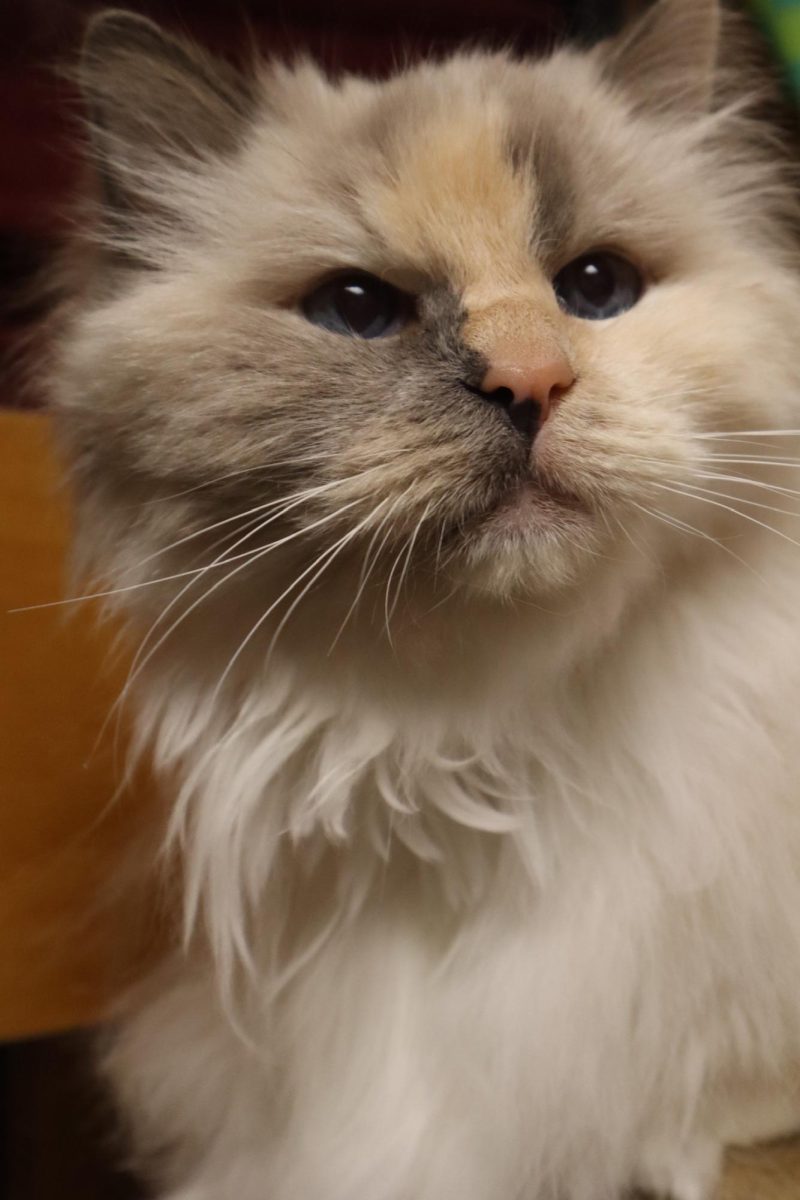
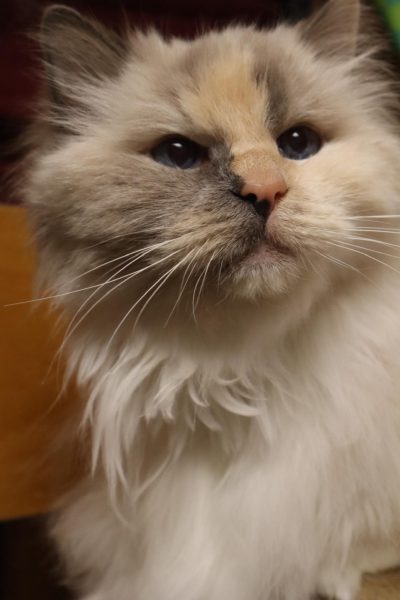
Marshmallow, a pure ragdoll cat owned by freshman Reuben Oeverman, keeps watch over Oeverman’s dorm and the walkway in front of Kalsbeek-Huizenga-van Reken (KHvR). She is 14 years old and “is very fluffy and sheds quite a bit,” according to Oeverman. She has student friends from both KHvR and other dorm buildings.
Oeverman explained that Marshmallow’s favorite activities are sleeping and begging for food, saying that she even “wakes me up every day before my alarm by suffocating me in her fur, and won’t stop until I give her breakfast.” Expanding on Marshmallow’s personality, Oeverman shared that “Marshmallow is very loud when she wants to be — it’s actually quite impressive. She only yells when she’s hungry, but she won’t stop unless she is getting attention or food. I think of her to have [the] personality of Lucille Bluth from Arrested Development.”
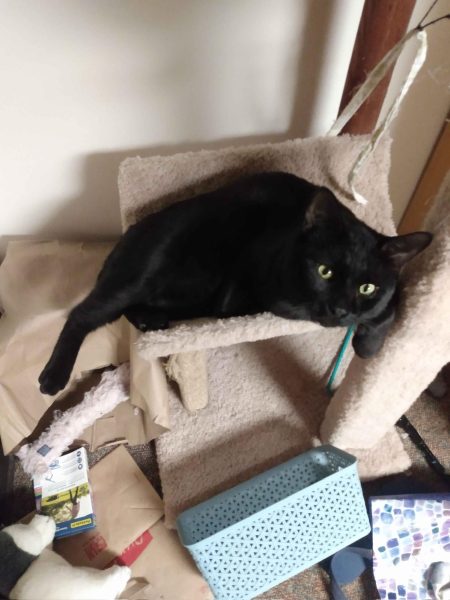
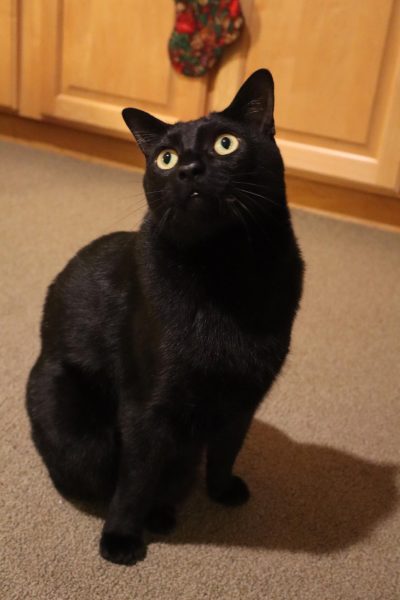
KHvR is also guarded by Hobbes, a 1½-year-old rescue cat owned by Griffin Rau. “He used to be part of a feral cat colony in a neighborhood near Calvin,” Rau said. Hobbes did not get along with the other cats in the colony, so the people in the program who caught him decided to foster him until his forever home with Rau could be found. “He is the sweetest and most people-loving cat you’ll ever meet,” Rau told Chimes.
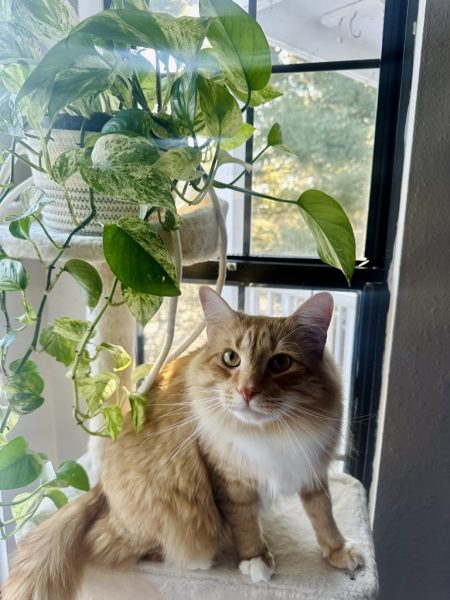
Wendell, a 4-and-a-half-year-old maincoon-mix rescue cat, is owned by Amanda Russell, area coordinator of KHvR. Russell describes Wendell as “a sweet cat with a unique personality” who largely enjoys watching over students walking through KHvR’s back path through a window. Russell explained that “he is affectionate and is in a constant state of purring, though he does have the occasional boy-orange-cat-energy and zooms around the apartment,” and that “he loves when guests come over because he gets a lot of pets and attention.”
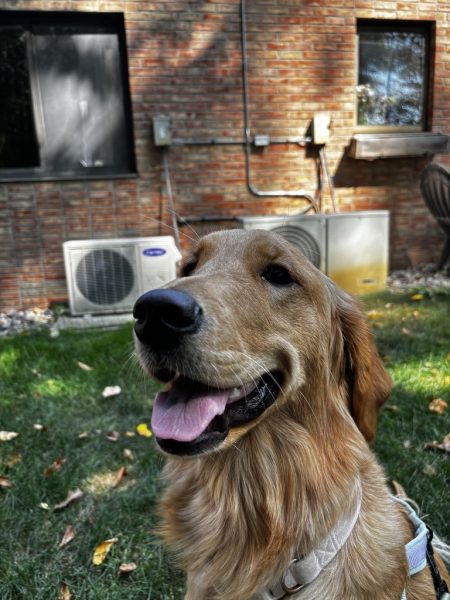
Teddy, a 2-year-old golden retriever also owned by Russell, is described as a “sweet girl pup.” Russell shared that “Teddy is everyone’s best friend — or at least she thinks she is. She is a sweetheart who enjoys the simplest things in life, a pet on the head or a spoonful of peanut butter. Teddy gets so excited when she meets someone new or sees an old friend that she excite-pees. Like Wendell, she watches both windows for students walking past, although she wouldn’t make the greatest guard dog. All she wants from strangers is pets, and she’ll flop on her back to get belly rubs if [you] let her.”
Both Wendell and Teddy keep watch over students in the KHvR community, especially students in van Reken, as they walk both to and from the dorms. Russell said that the two are often in her office during her office hours so that they can spend time with students. According to Russell, in terms of student friends, “there are a number of students who ask to take Teddy on walks and some who take pictures of Wendell when he sits on our windowsill. I also will occasionally ask those I meet with if they would like a furry friend to join, especially in some care conversations.”
On the other side of the beltline, Hiccup, lovingly referred to as a “garbage cat” by his owner, Abby Kuiper, guards over the KE Stairs and the basketball court from Delta. Hiccup is around 3 years old and is a rescue cat from Florida. “He likes butt scratches, meowing, and … he likes to watch bird TV,” Kuiper said. Hiccup is also referred to as the “tri-pod cat” in his apartment, as he has been missing one of his back legs since Kuiper adopted him.
Hiccup is another registered ESA, devoted to taking care of his human. “Generally, he is really good at telling when I’m sad. Like, if I’m sad or, like, anxious, he’ll come and snuggle with me,” Kuiper said. “We have a symbiotic relationship, in that he gives me snuggles and I give him scratches when he can’t scratch because his leg’s gone. It’s a good relationship.”
ESAs on campus
Pets under student care are allowed to live on campus due to Calvin’s ESA Support Animal Protocol, which states that “Calvin University is committed to providing reasonable accommodations to persons with disabilities in compliance with applicable State and Federal laws. This policy governs the use of emotional support animals on campus by persons with documented disabilities.” In terms of what is considered an ESA, the protocol continues on to explain that they are animals that provide “emotional or other support that ameliorates one or more identified symptoms or effects of a person’s disability.” A disability, as described by the Americans with Disabilities Act (ADA), is “a physical or mental impairment that substantially limits one or more major life activities, a record of such an impairment or being regarded as having such an impairment.”
Oeverman explained that Marshmallow is a registered ESA at Calvin, “even if she doesn’t act like it.” Oeverman continued that “she helped me a lot during the pandemic when I was feeling lonely,” and that “she also helped a lot with the transition into college.” Rau said that “having an ESA helps give me both a distraction and a grounding presence when I find myself in an anxiety spiral or a panic attack.”
On the benefit of having an ESA pet, Oeverman shared that “having an ESA is great! She makes every day feel different, and it’s always a lovely time petting her and sleeping with her — especially first starting out here and not knowing anybody.” Rau found that as the days get shorter and colder, “it can be harder for a lot of people to find motivation,” but having an ESA “is a good way to get yourself moving and taking care of tasks for the day” as an ESA needs “you to get up feed them, clean up after them, and pay attention to them each day regardless of how you feel.”
Although Wendell and Teddy are not ESAs — the process for keeping pets on campus is different for staff members — Russell feels that the program at Calvin has had a positive impact on student life. “I love that Calvin provides this option to students. I can’t imagine not having my pets! And I always love asking residents about their ESAs and seeing them attempt to take them on walks or seeing them in the windows. They definitely meet a need for students to succeed and feel grounded as they pursue their degree.”

