


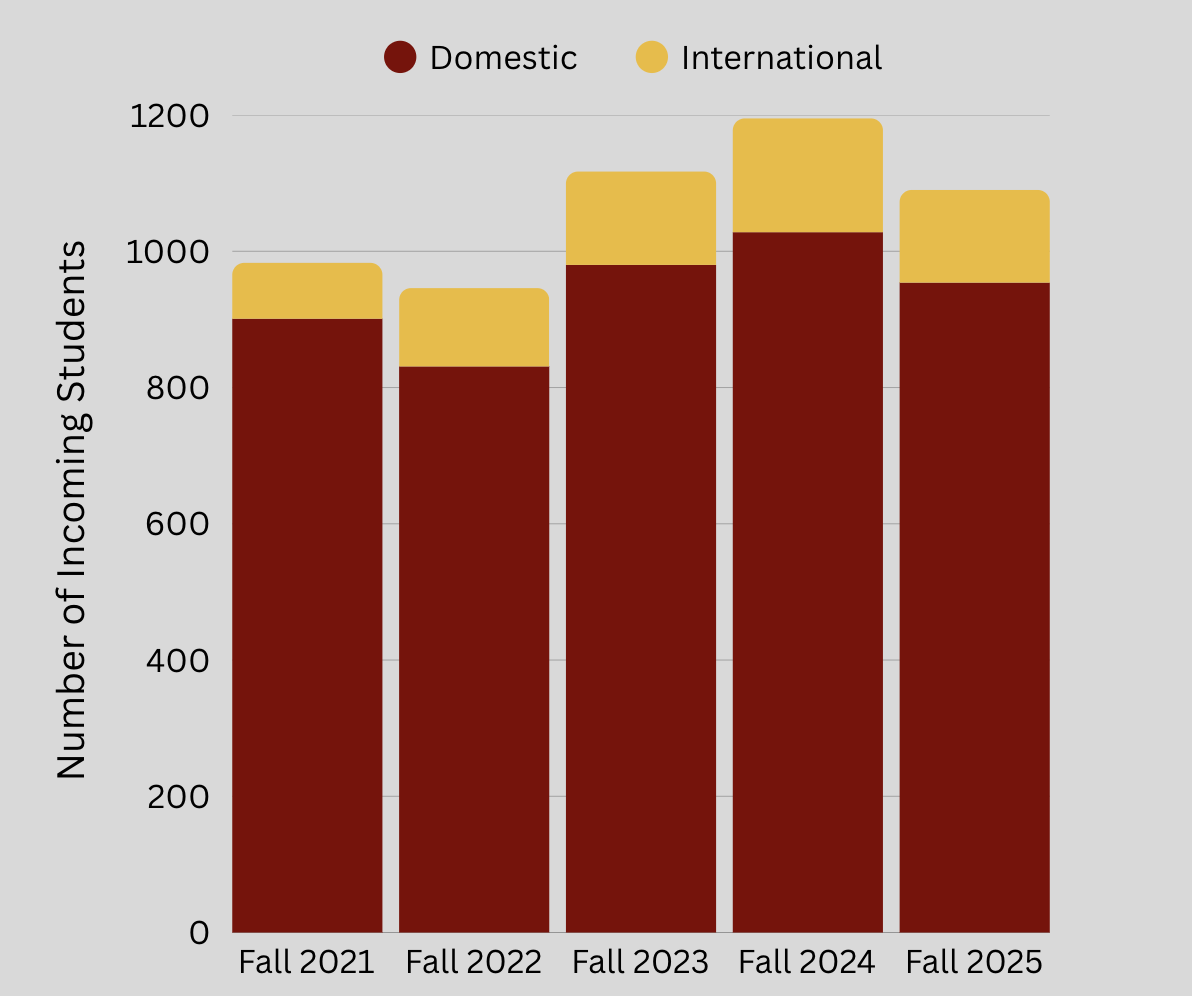
This fall, Calvin boasts 1,122 new incoming students and 3,674 total students, with 15% of that total population being international students —550, the highest total number of international students in the past five years — according to newly released Day 10 census data from the university.
“There is a significant interest in a Calvin education from many around the globe. That’s always a great validation of the education students are receiving while at Calvin,” commented James Koeman, director of financial aid.
Despite the continued growth in the number of total international students, this year’s incoming class of international students was the smallest since 2023, with 136 students (down from 167 in fall 2024). Although Calvin has retained total international student numbers, recent federal changes have led to a decreased number of international students entering Calvin for the first time this year.
This comes in the context of the federal administration’s crackdown on international travel and visas for students at universities all across the United States, as has been reported by The New York Times. However, despite the threats towards potential and incoming students, Calvin’s enrollment strategies targeting incoming students have helped to continuously increase the number of total international students over the past five years.
Total international population growth
Lauren Jenson, vice president for enrollment strategy, told Chimes that many of the recruitment efforts for this year’s incoming class were based on strategies used in previous years. Jenson explained that some strategies that have worked well for Calvin are “recruit[ing] in schools and geographies that we have been building relationships with over time, both domestically and internationally,” as well as the increase of the enrollment team’s “travel and recruitment efforts in strategic ways.”
As to why the international student population at Calvin is the largest in the past five years despite visa challenges, Jenson suggests that all of the deliberate strategies the enrollment team has been using to recruit international students at Calvin in recent years has led to this growing number.
“We have been strategic in our international student growth over the past five years; those strategies include increasing our recruitment travel and immigration support, strategically adapting our approaches to where we travel and how we recruit, leaning on the strengths of our international community here at Calvin, and building our reputation in new international markets,” Jenson explains.
This trend of growth started post-pandemic: “Since the pandemic, our number of incoming international students has grown,” says Jenson. However, she stated that “even though this year’s incoming class was a little smaller than last year, it was still a great class.”
In getting both international and domestic students to Calvin, Koeman says that the incentive of financial aid is relative to each family. However, in terms of making Calvin accessible to all, Koeman explains that “for both domestic students and international students, we strive for a combination of an academic evaluation for scholarship consideration and an evaluation of family financial context for consideration for additional resource-based aid.”
This year, Calvin will be instituting a later fall orientation program in the second half of the semester. This orientation will be held for nine students, who are unaccounted for in the total number of incoming students due to their absence from campus when the census took place on the 10th day of the semester.
The full Day 10 report featuring data from 2025 and previous years can be found on Calvin’s website.

